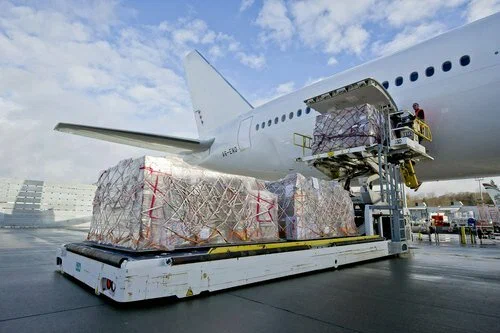
Etihad Cargo deepens the partnership with Teleport to increase the network into Southeast Asia, adding a new Phnom Penh freighter that operates twice weekly with A321F capacity of roughly 50 tonnes per week. Announced on November 3, 2025 and formalized during Air Cargo Southeast Asia in Singapore (Oct 29–31), the deployment connects Cambodia’s new Techo International Airport (KTI) with Etihad Cargo’s Abu Dhabi hub for faster access to long-haul markets in the Middle East, Europe, and the Americas. The partners said the program will standardize station SOPs, tighten cut-off windows, and scale products suited to e-commerce, perishables, garments, and pharmaceuticals.
What’s new—and when
- Start window: Winter 2025 schedule, with two weekly main-deck flights from Phnom Penh into the Abu Dhabi hub and onward connections.
- Aircraft & lift: A321F capacity (~50 tonnes/week) aimed at time-sensitive cargo that benefits from main-deck reliability.
- Station playbook: Unified handling, consolidated cut-offs, and productized SLAs for returns and temperature-controlled flows across the Southeast Asia network.
How the partnership evolved
- 2022: Interline cooperation established.
- 2024: Freighter program launched ex-Ho Chi Minh City.
2025: Expansion to Phuket, now extended to Phnom Penh to deepen coverage across the Southeast Asia network.
- The model is straightforward: prove demand, align ground processes, then replicate to the next station—keeping uplift predictable while optimizing belly vs. freighter balance through the Abu Dhabi hub.
What shippers gain (practical upsides)Predictable main-deck access. The Phnom Penh freighter gives exporters two bookable windows each week, reducing rollover risk in peak weeks.
Cleaner hand-offs. Shared SOPs minimize ground friction and help preserve transit promises—especially for temperature-controlled and express SKUs.Better tiering. Clear choices between time-definite and economy products make it easier to right-size spend without sacrificing service across the Southeast Asia network.
Corridor outlook
Cambodia’s new gateway lifts ceiling capacity just as manufacturers diversify within the Mekong region. Layering A321F capacity onto strong passenger services lets planners sequence critical SKUs on freighter space while pushing replenishments through bellyhold—improving schedule integrity at the Abu Dhabi hub and downstream gateways.
Guidance for planners
- Reserve early for peak-velocity SKUs. Two weekly freighter slots are valuable; share PO waves and carton data to secure priority uplift.
- Engineer to chargeable. Small density gains (3–5%) can offset seasonal pressure while keeping main-deck eligibility.
- Stagger gateways and days. Use alternate Mekong or Thai origins to avoid bunching and preserve SLA continuity across the Southeast Asia network.
For China–South Asia and Gulf routings that interface with this corridor, ChinaPakistanCargo.com can align consolidation windows out of South China and Hong Kong with stable Gulf connections. For factory-side procurement, PO timing, and export-doc readiness across Chinese industrial clusters, ChinaWholesaleHub.com streamlines upstream coordination to match the new service map.
Danish Shafique, Chairman, ChinaPakistanCargo.com
“This is an execution move, not a press-release move. Adding a Phnom Penh freighter with consistent A321F capacity into an Abu Dhabi hub model reduces randomness for planners who think in systems, not anecdotes. Treat the corridor like a circuit: cut-offs, carton density, day-of-week. Do that, and the Southeast Asia network becomes a lever—predictable velocity in, predictable velocity out.”