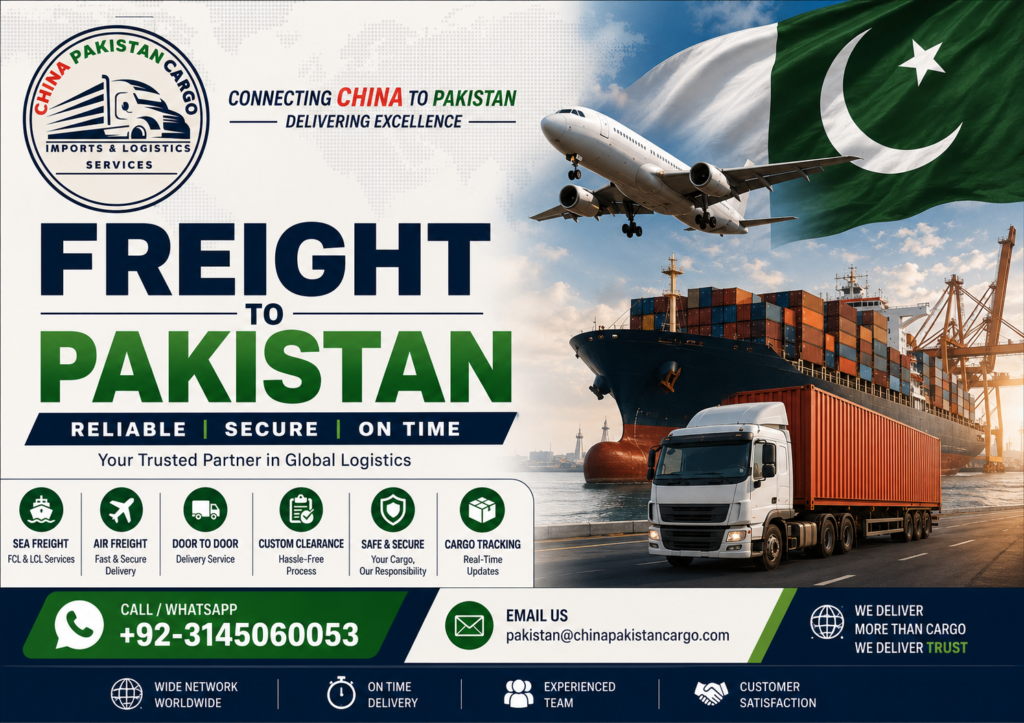
Freight to Pakistan
Moving freight across borders is rarely as simple as it sounds. Between customs paperwork, carrier schedules, and unpredictable rates, arranging freight to Pakistan can feel overwhelming if you don’t know what to expect. At ChinaPakistanCargo, we’ve built our entire operation around solving exactly this problem. This guide breaks down your options — from air freight to sea freight — so you can make a decision based on facts, not guesswork.
Why China Is the Starting Point for Most Freight to Pakistan
A large share of freight to Pakistan originates in China, thanks to the sheer volume of trade between the two countries. Electronics, textiles, machinery, and consumer goods move along this corridor daily, which is why choosing the right freight forwarder China to Pakistan partner matters so much.
A good freight forwarder does more than book space on a plane or ship. They handle documentation, coordinate customs clearance, and manage the handoff between carriers — so your shipment doesn’t get stuck in limbo somewhere between origin and destination. As ChinaPakistanCargo, this is the exact role we play for our customers every single day.
Air Freight to Pakistan: Speed at a Price
If time matters more than cost, air freight to Pakistan is usually the go-to option. It’s the fastest way to move goods internationally, typically completing a journey in days rather than weeks.
That said, speed comes with a tradeoff. Air freight charges from China to Pakistan are generally higher per kilogram than sea freight, especially for heavier shipments. Charges also fluctuate based on fuel surcharges, seasonal demand, and available cargo capacity — so pricing today may not match pricing next month. At ChinaPakistanCargo, we keep our air freight rates transparent and updated, so you’re never quoted one price and charged another.
Air freight tends to make the most sense for:
- Time-sensitive shipments
- High-value or fragile goods
- Smaller parcels where per-kilogram cost matters less
- Businesses that can’t afford stockouts
Freight from China to Pakistan by Sea: The Cost-Effective Alternative
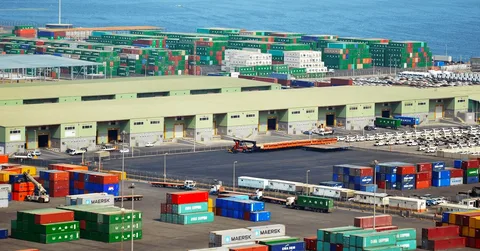
For bulkier, less time-sensitive shipments, China to Pakistan sea freight is usually the more economical route. While transit times stretch into weeks rather than days, the cost savings per unit of cargo are significant, especially for large volumes.
Businesses importing furniture, machinery, raw materials, or bulk inventory often rely on sea freight because it allows them to move large quantities without the steep per-kilogram costs associated with air transport. The tradeoff is planning ahead — sea freight requires more lead time built into your supply chain. Our ChinaPakistanCargo sea freight team helps customers plan around this lead time so bulk shipments arrive exactly when needed.
Comparing Freight Rate from China to Pakistan: Air vs. Sea
Understanding the freight rate from China to Pakistan starts with knowing which mode fits your shipment. As a general rule:
- Air freight costs more per kilogram but arrives faster
- Sea freight costs less per kilogram but takes longer
- Consolidated freight (grouped with other shipments) can reduce costs on both air and sea options
- Charter or dedicated freight is priced individually and works best for large, urgent shipments
Rates also depend on fuel prices, seasonal demand (like pre-holiday shipping surges), and the specific ports or airports involved. Getting a quote based on your actual shipment — weight, dimensions, and urgency — will always be more accurate than a generic estimate.
What to Look for in a Freight Forwarder for China to Pakistan Shipments
Not all freight forwarders operate the same way. When evaluating a freight forwarder China to Pakistan provider, consider the standards we hold ourselves to at ChinaPakistanCargo:
- Experience with this specific trade route — not all forwarders understand the customs nuances between China and Pakistan.
- Transparent pricing — hidden fees are one of the most common complaints in international freight.
- Multiple shipping options — access to both air and sea freight gives you flexibility as your needs change.
- Real-time tracking — visibility into your shipment’s location reduces stress and helps with planning.
- Customer support responsiveness — issues happen; how quickly they’re resolved matters more than whether they happen at all.
Choosing Between Air Freight and Sea Freight for Your Business
The right choice for freight to Pakistan ultimately comes down to your priorities. If you need something delivered quickly and can absorb higher per-kilogram costs, air freight to Pakistan is the clear choice. If you’re moving larger volumes and have flexibility on timing, sea freight from China to Pakistan will likely save you significantly on cost.
Many businesses actually use a mix of both — air freight for urgent or high-value items, and sea freight for routine bulk restocking. A capable freight forwarder can help you plan this kind of hybrid strategy so you’re not overpaying for speed you don’t need, or waiting longer than necessary on shipments that matter.
Final Thoughts on Freight to Pakistan
Freight to Pakistan doesn’t have to be complicated, but it does require the right information and the right partner. Whether you’re weighing air freight charges from China to Pakistan against sea freight timelines, or simply trying to understand freight rates before committing to a shipment, working with an experienced freight forwarder makes the entire process smoother, faster, and more predictable.
If you’re planning your next shipment, ChinaPakistanCargo can put together a tailored quote based on your actual cargo details rather than a generic estimate — it’s the only way to know exactly what you’re paying for and when your goods will arrive.
Frequently Asked Questions
1. What’s the difference between air freight and sea freight to Pakistan? Air freight is faster but more expensive per kilogram, while sea freight takes longer but is generally more cost-effective for larger or bulkier shipments.
2. How are air freight charges from China to Pakistan calculated? Charges are typically based on weight or volumetric weight, fuel surcharges, seasonal demand, and the specific route or airport pair being used.
3. How long does China to Pakistan sea freight usually take? Sea freight transit times generally range from a couple of weeks to over a month, depending on the origin port, destination port, and shipping schedule.
4. Do I need a freight forwarder, or can I book directly with a carrier? A freight forwarder like ChinaPakistanCargo handles documentation, customs clearance, and carrier coordination, which typically saves time and reduces the risk of costly errors compared to booking directly.
5. What affects the freight rate from China to Pakistan the most? Shipment weight and volume, mode of transport (air vs. sea), fuel prices, and seasonal demand are the biggest factors influencing freight rates.
6. Is air freight worth it for small businesses? It depends on the shipment. For urgent, high-value, or smaller-volume goods, air freight often makes sense despite the higher cost; for bulk inventory, sea freight is usually more practical.