
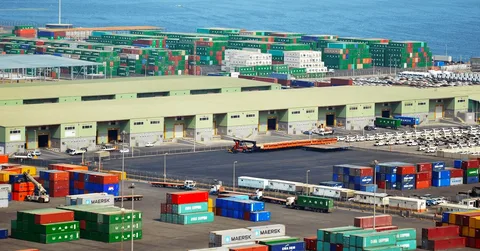
Qatar General, Bulk cargo sees annual surge of 43% year-on-year in October 2025, underscoring a strong second-half upswing across the country’s gateways. Official monthly figures highlighted 216,466 tonnes of general and bulk cargo handled, alongside approximately 119,000 TEUs, more than 9,500 RoRo units, and 245 vessel calls across Hamad, Doha, and Al Ruwais ports. The momentum reflects steady port throughput improvements, resilient project demand, and tighter operational discipline from terminal operators.
What the October numbers signal
- General & bulk: 216,466 tonnes (+43% YoY) shows sustained strength in breakbulk cargo flows linked to construction and industrial shipments.
- Containers: ~119,000 container volumes (TEUs) point to stable import programs and transshipment reliability as carriers maintain schedules.
- RoRo: 9,500+ units indicate healthy automotive and equipment cycles; RoRo cargo often mirrors broader consumer and infrastructure demand.
- Vessel calls: 245 port calls suggest steady berth utilization and practical efficiency gains within the national port throughput picture.
Behind the figures is a multi-month pattern: mid-year updates also showed elevated general and breakbulk cargo tonnages and robust building-material flows. The October baseline, therefore, looks like part of an ongoing normalization at Hamad Port and its sister gateways rather than a one-off spike in container volumes or RoRo cargo.
Drivers of the surge
Operational scale at Hamad Port: Capacity additions and refined yard planning helped lift port throughput, balancing yard dwell with berth productivity.
- Construction & industrial demand: A pipeline of projects has kept breakbulk cargo moving, with steel, project components, and aggregates contributing to the mix.
- Network reliability: Consistent calls and predictable connections supported container volumes and kept RoRo cargo scheduling efficient for OEMs and dealers.
What to watch into Q4–Q1
- Project cadence: If construction material flows remain steady, general and breakbulk cargo should continue to buoy totals.
- Modal balance: A firm October often precedes stronger year-end container volumes and seasonal RoRo cargo pushes tied to inventory planning.
- Service stability: Vessel-call consistency and yard discipline will determine whether port throughput stays on its improved trend into early 2026.
FAQs
What caused the 43% year-on-year surge in general and bulk cargo?
The surge is driven by strong construction and industrial demand, steady breakbulk shipments, and improved operational capacity at major ports, especially Hamad Port.
How much general and bulk cargo was handled in October 2025?
Qatar handled 216,466 tonnes of general and bulk cargo in October, marking a 43% YoY growth tied to construction materials and industrial shipments.
What do the container numbers (TEUs) reveal?
With around 119,000 TEUs, the data shows stable import programs, reliable transshipment flows, and consistent carrier schedules.
Why did RoRo cargo exceed 9,500 units?
RoRo volumes increased due to healthy movement of vehicles and heavy equipment, reflecting strong consumer demand and ongoing infrastructure projects.
What does the rise in vessel calls signify?
The 245 vessel calls highlight stronger berth utilization, consistent service rotations, and better operational efficiency at Hamad, Doha, and Al Ruwais ports.
Is the October surge a temporary spike?
No. Multiple months have shown elevated breakbulk and building-material flows, suggesting this is part of a broader, ongoing normalization trend.
What factors are driving port throughput improvements?
Key drivers include capacity expansion at Hamad Port, refined yard planning, strong project cargo, and dependable service connections across shipping lines.
How will construction activity impact volumes moving forward?
If construction demand remains steady, general and breakbulk cargo volumes are expected to stay strong through Q4 and early 2026.
What trends should be monitored into Q4 2025 and Q1 2026?
Expect potential increases in container volumes, seasonal RoRo spikes tied to inventory planning, and continuing strength in breakbulk cargo.

12 thoughts on “Qatar General, Bulk cargo sees annual surge of 43%”
I love how easy it is to navigate through the different categories. No lag and the graphics are top notch. I am spending a lot of my free time on idodin188 lately.
[770]Tequila Login Oficial | Mejores Slots y Depósitos con SPEI,Accede a tequila para disfrutar de las mejores slots online. Descarga la app, aprende las reglas de blackjack y gestiona tu cuenta fácilmente. ¡Regístrate hoy! visit: tequila
This site is honestly a hidden gem. Everything from the registration to the actual gaming is seamless. I really enjoy 988wangame.
Such a fun way to spend my free time. The games are fair and the rewards keep me coming back for more. Go check out 6jiligames now.
I really appreciate the bonuses they offer here. It gives you a nice little boost when starting out. I am sticking with brlwin365 for my daily plays.
The game variety on this site is insane. I love how smooth the interface is even on my old phone. Highly recommend pkbw777
[5287]dhaka88 Official Login | বিকাশ পেমেন্ট ও সেরা ক্যাসিনো বোনাস,dhaka88 অ্যাপ ডাউনলোড করে সেরা অনলাইন ক্যাসিনো বোনাস পান। বিকাশ দিয়ে গেম খেলুন এবং স্লট গেমের নিয়ম জেনে আজই জয়েন করুন। visit: dhaka88
The graphics are crisp and the gameplay is addictive. I love how easy it is to navigate the site. Give phokgameslogin a try, you won’t regret it.
I really appreciate the welcome bonus they gave me. It gave me enough credit to explore all the different rooms. vnzs88 is definitely a top tier choice.
Clean design and great performance on mobile. It is hard to find a place this reliable these days. I am sticking with bruuu555 for a long time.
Really impressed with the fast payouts and the overall interface. It makes everything so much easier. Highly recommend bdsky999 to everyone.
Just tried it out and I am loving the vibe. The setup was a breeze and the gameplay is addictive. bdjoya9app is definitely my new favorite.
Comments are closed.